Touch Is Everything: How the Fabrics You Choose Are Quietly Telling You How to Feel
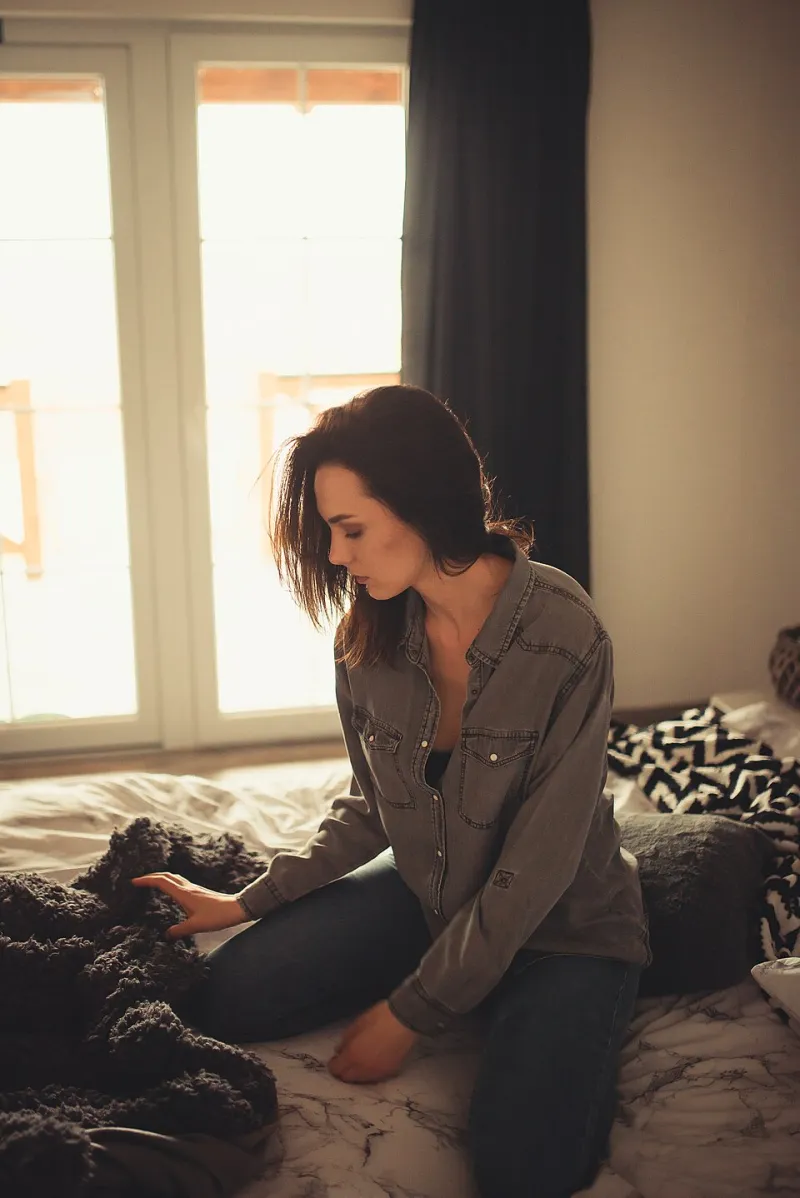
Photo: Shixart1985, CC BY 2.0, via Wikimedia Commons
There's a moment most of us have experienced but rarely name. You open your closet, bypass something perfectly nice, and reach instead for the thing that just feels right. Not because it's the most polished option. Not because it photographs well. Because your hand already knows what your brain is still catching up to — that today, you need that one.
We talk endlessly about color psychology, about the power of a great silhouette, about dressing for your body or your mood or the meeting you're dreading at 2 p.m. But texture? Fabric? The literal material that spends twelve or more hours pressed against your skin every single day? We barely mention it. And honestly, that's a little wild when you think about it.
Because touch is our most primal sense. Before we could see clearly, before language, we were responding to how things felt. That instinct doesn't go away just because we grew up and started buying clothes online.
Your Nervous System Is Already Dressing You
Here's something worth sitting with: your body has opinions about fabric that are completely separate from your aesthetic preferences. You might love the look of a stiff taffeta skirt, but if wearing it makes you feel vaguely on edge all day, that's information. Conversely, you might think a cozy oversized knit is "too casual" for your life, but if slipping it on makes your shoulders drop two inches, that's also information.
Researchers in sensory psychology have long understood that tactile experiences influence our emotional state — the weight of something on our body, the friction of a rough weave, the cool slip of silk against warm skin. These aren't just comfort preferences. They're signals your nervous system is sending about what it needs right now.
Some people find structure grounding. A blazer with a little body, a denim with some rigidity — it can feel like armor in the best possible sense, like a gentle reminder that you're held together. Others find that same structure suffocating, and what they need is something that moves when they move, something forgiving and fluid. Neither of these is a personality flaw. Both are just you, knowing yourself.
The Ritual Nobody Taught Us
Skincare routines get the full editorial treatment. We love a ten-step evening ritual, a Sunday reset, a serum that costs more than our electric bill and is somehow worth it. But the act of choosing what touches your body for an entire waking day? We treat it like an afterthought.
What if you approached your morning getting-dressed moment the way you approach your skincare shelf — with actual intention? Not spending more time on it necessarily, just bringing a little more presence to it.
Run your hand across the options before you pull something off the hanger. Notice what your fingers want to linger on. On a day when you're emotionally wrung out, are you reaching for something soft and substantial — a brushed cotton, a loose cashmere, a jersey so worn-in it's basically a second skin? On a day when you feel sharp and ready, does your hand land on something with a little more edge — a crisp linen, a structured wool, something that feels intentional?
This isn't mysticism. It's just paying attention. And paying attention to yourself is, at its core, an act of love.
What Different Textures Actually Do
Let's get a little specific, because this is where it gets interesting.
Cashmere and soft knits are almost universally described as comforting — there's a reason we reach for them when we're sick, heartbroken, or just need a slow Saturday. The weight combined with softness mimics something close to a gentle embrace. If you've ever wondered why a good cashmere sweater feels like being taken care of, this is why.
Silk and satin carry a completely different energy. Cool at first touch, then warm. There's something about the way they move — slightly unpredictable, responsive to the body — that feels both luxurious and a little electric. Wearing silk can feel like a secret you're keeping, even in a room full of people.
Linen is interesting because it's not immediately soft, but it has an honesty to it. It wrinkles, it breathes, it gets better the more you live in it. People who love linen tend to love that it doesn't pretend to be anything other than what it is. There's a quiet confidence in that.
Velvet is pure sensory indulgence — the kind of fabric that practically asks to be touched. Wearing it is almost inherently intimate because it demands a certain slowness. You notice it. It notices you back.
Rough textures — a thick tweed, a nubby boucle, an intentionally textured knit — can be grounding in a different way. They have presence. They take up space. For some people, that's exactly what they need to feel anchored in their own body.
Building a Wardrobe That Knows How to Hold You
Once you start thinking about fabric as a form of self-care, the way you shop starts to shift. You stop buying things purely because they look good on a hanger or in a flat lay and start asking a different question: How will this feel against my skin at 3 p.m. on a Wednesday when I'm tired?
That question will save you from a lot of purchases you'd regret. It'll also lead you toward pieces you'll reach for again and again, the ones that end up being your most-worn items not because they're the most impressive, but because they actually feel good to be in.
This is what a truly romantic wardrobe looks like, by the way. Not just beautiful things — beautiful things that you genuinely want to live inside of. There's a difference, and it's a meaningful one.
Start small if this feels like a big shift. The next time you're folding laundry or standing in a dressing room, just notice. Notice what makes you want to put something on versus what you wear out of obligation. Notice which fabrics you gravitate toward on your hardest days versus your easiest ones. You're collecting data about yourself, and that data is worth something.
The Most Intimate Conversation You're Not Having
At the end of the day, your skin is the most honest audience you have. It doesn't care what's trending. It doesn't care about the brand. It just knows what feels right and what doesn't, and it's been trying to tell you for years.
Listening to that — really listening — is one of the quieter, more profound ways you can choose yourself. Not in a dramatic, overhauling-your-entire-closet way. Just in the small daily way of reaching for the thing that feels like care instead of the thing that feels like compromise.
That's the intimacy of fabric, and it's been there the whole time, waiting for you to notice.