Dressed for You, Not the Tag: How the Right Fit Becomes a Daily Love Letter
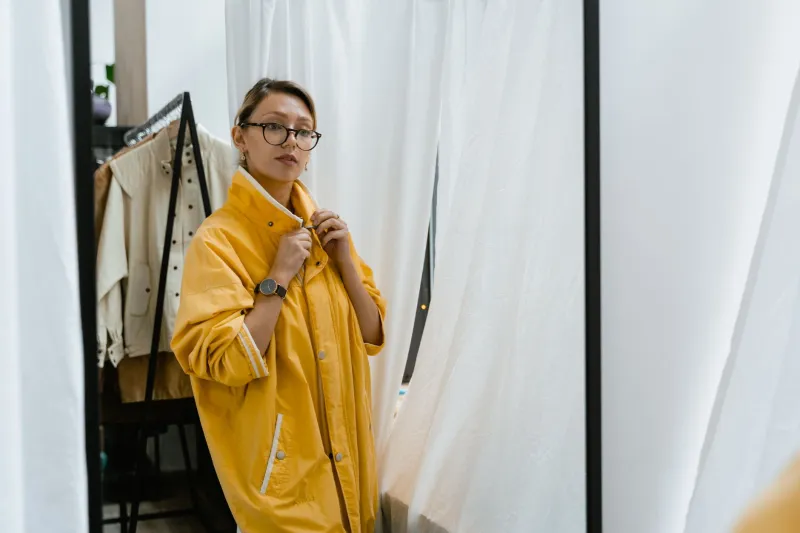
There's a particular kind of quiet suffering that happens in fitting rooms across America every single day. You grab your usual size. It doesn't quite work. So you try the next size up, feel a flash of something uncomfortable in your chest, and then spend the rest of the afternoon second-guessing yourself. Sound familiar?
Here's the thing nobody talks about enough: that discomfort isn't about your body. It's about a system that was never designed with you specifically in mind. Sizing is notoriously inconsistent across brands — a 6 at one retailer is a 10 at another, and neither number means anything real about who you are or how you look. The sooner you let go of the tag, the sooner you can actually start getting dressed with love.
What Fit Actually Means (and Why It's Different from Size)
Fit is the way a garment moves with your body — the way a shoulder seam lands exactly where your shoulder ends, the way a waistband sits without digging in, the way a sleeve grazes your wrist instead of swallowing your hand. It's personal. It's specific. And it has almost nothing to do with the number printed on the label.
When something fits you well, you don't have to think about it. You just... wear it. You move through your day without tugging, adjusting, or feeling vaguely uncomfortable in a way you can't quite name. That ease? That's not a luxury. That's what clothes are supposed to feel like.
When something doesn't fit — even if it's technically your size — it becomes a distraction. A constant, low-grade reminder that something is off. And over time, those reminders accumulate into a relationship with your wardrobe that feels more like friction than joy.
The Emotional Weight of the Wrong Size
We've all done it. Bought something a little too snug because we loved the print, or held onto pants from five years ago because letting them go felt like admitting something we weren't ready to admit. Clothes carry so much more than fabric — they carry expectation, memory, aspiration, and sometimes, a kind of quiet cruelty we'd never direct at anyone else.
Think about how you talk to yourself in a dressing room versus how you'd talk to a friend trying on the same outfit. You'd never tell her she should just lose a few pounds so the dress would work. You'd tell her to find a dress that works now, for her body, exactly as it is today.
That's the shift. Shopping for fit over fantasy means treating yourself with the same generosity you'd extend to someone you love.
Tailoring as a Love Language
One of the most underrated style moves you can make is learning to see a tailor as a regular part of your wardrobe routine — not a last resort, not an extravagance, but a baseline act of self-care.
A good tailor can take a blazer that's almost perfect and make it actually perfect. They can bring in a waist, shorten a hem, let out a seam just enough to make something go from unwearable to your new favorite thing. In a lot of ways, tailoring is the fashion equivalent of a relationship that's worth working on — it takes a little effort, but the payoff is something that genuinely fits your life.
Many alterations are more affordable than people expect. Hemming pants can run anywhere from $10 to $30 at a local tailor. Taking in a dress might cost $40. When you consider the price-per-wear of something you'll actually reach for versus something that hangs in your closet untouched, the math tends to favor the alterations every time.
If you've never been to a tailor, start small. Bring one piece that you love but that doesn't quite work. See what they can do. Chances are, you'll leave wondering why you waited so long.
Knowing Your Measurements Is a Form of Self-Knowledge
Most of us don't actually know our measurements. We know our general size, maybe — a rough sense of whether we're an S, M, or L — but not the actual numbers. And that vagueness costs us, both in bad purchases and in the subtle sense that we're always approximating ourselves.
Taking your measurements — bust, waist, hips, inseam, shoulder width — takes about ten minutes and can genuinely change how you shop. Online shopping becomes less of a gamble. You can compare your numbers to a brand's size chart instead of just guessing. You stop buying things that are close enough and start buying things that are actually right.
There's something quietly powerful about knowing your own dimensions. It's a form of paying attention to yourself. Of saying: I exist in a specific body, and that body deserves clothes that were made for it.
Building a Wardrobe That Actually Loves You Back
Once you start shopping for fit, your relationship with your wardrobe changes. You stop accumulating things and start curating them. You become more selective — not in a rigid, joyless way, but in the way of someone who knows what they're looking for and isn't willing to settle.
You'll probably end up with fewer pieces, but you'll wear all of them. That blazer that fits your shoulders perfectly. The jeans that don't gap at the waist. The dress you can breathe in. These become the anchors of your closet — the things you reach for automatically because they make you feel like yourself.
That's the goal, isn't it? Not to look like someone else. Not to fit into an arbitrary category. But to get dressed every morning and feel, in some small and real way, like your clothes are on your side.
The Romantic Case for Letting Go of the Number
At Love Collé, we believe that style is deeply personal — that the way you dress is a kind of ongoing conversation with yourself about who you are and how you want to move through the world. And that conversation goes a lot better when you're not fighting with your clothes.
Releasing your attachment to a specific size isn't about giving up. It's about getting honest. It's about deciding that how something feels on your body matters more than what the tag says about it. It's about choosing comfort, confidence, and ease over the abstract idea of a number.
The clothes that fit you — truly fit you — become something more than fabric. They become a daily affirmation. A small, consistent reminder that you are worth dressing well, right now, exactly as you are.
That's not just good style advice. That's love.