It's Complicated: How to Finally Figure Out Which Jewelry Pieces Deserve to Stay
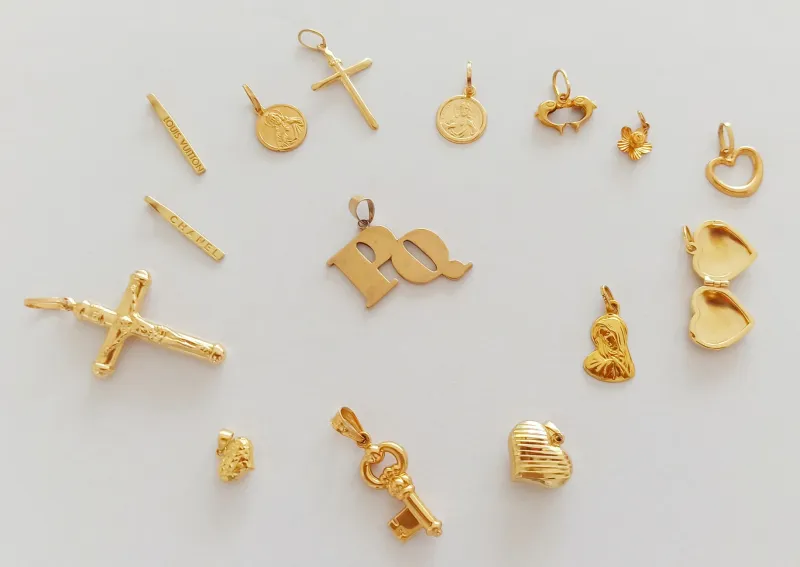
There's a ring in the back of your jewelry box. You know the one. Maybe it was your grandmother's, or an ex gave it to you during a period of your life you've mostly moved on from. It doesn't suit you — maybe it never did — but every time you think about letting it go, some invisible hand pulls you back. What if I regret it? What if someone notices it's missing?
This is the jewelry relationship status nobody talks about: it's complicated.
Unlike clothing, which tends to get donated the moment it stops fitting, jewelry gets held onto with a particular kind of emotional ferocity. Pieces accumulate. They get shuffled to the back of drawers. They sit in velvet pouches, untouched for years, quietly demanding something from you just by existing. The result is a collection that's less a curated expression of who you are and more a museum of who you used to be — or who other people hoped you'd become.
It's time to do a little emotional archaeology.
Why Jewelry Hits Different
Clothes are functional. We swap them seasonally, donate without much ceremony, and rarely feel guilty about moving on. But jewelry? Jewelry is dense with meaning. A necklace can carry a whole relationship inside its chain. A pair of earrings can smell like someone's perfume even years later. The physical smallness of jewelry somehow makes the emotional weight bigger, not smaller.
Then there's the heirloom factor. Inherited pieces come loaded with expectation — the unspoken assumption that wearing something passed down to you is an act of love and respect. And sometimes it is. But sometimes, honestly? It's just a piece you don't like, in a metal you don't wear, in a style that has nothing to do with who you are. And keeping it out of obligation isn't honoring anyone. It's just holding yourself hostage.
The Emotional Archaeology of Your Collection
Pull everything out. Lay it on a white towel or a clean surface where you can actually see it — all of it, including the pieces you forgot you had. This moment of full visibility is the whole point. You can't make honest decisions about things you've been keeping in the dark.
Now, pick up each piece and ask yourself three questions:
Does this make me feel like myself? Not who I was, not who someone else wanted me to be — but who I actually am right now, today.
Would I buy this if I saw it in a store tomorrow? This is the neutralizer question. Strip away the history, the sentiment, the obligation. If it were just a piece of jewelry with no backstory, would it earn a place in your life?
When did I last wear this, and how did I feel? If you can't remember, that's your answer.
The Guilt Pieces
These are the ones that stay unworn specifically because you feel bad about not wearing them. The engagement ring from a relationship that ended. The bracelet your mom picked out that isn't remotely your style. The gold chain your dad gave you that's too heavy and too masculine for how you dress.
Here's a reframe worth sitting with: keeping something you never use isn't the same as honoring it. In fact, there's something quietly disrespectful about letting a meaningful piece gather dust when it could be living a full life somewhere else — on someone who genuinely loves it.
For heirloom pieces that feel too significant to donate or sell but too uncomfortable to wear, consider repurposing. A jeweler can often reset a stone, melt down a chain, or incorporate an old piece into something new that actually feels like you. That's not betrayal. That's evolution.
The Obligation Pieces
These are gifts — from partners, family, friends — that you kept because getting rid of them felt ungrateful. You wore them once or twice to prove something, and now they just sit there, a tiny monument to someone else's taste.
If the relationship is still in your life and the piece genuinely doesn't suit you, it's okay to quietly pass it along. Most people who give gifts want them to be used and loved, not preserved as evidence of affection. And if the relationship is no longer in your life? You owe that piece — and yourself — nothing.
The Almost-Right Pieces
These are sneaky. They're pieces you actually like in theory — the right metal, the right vibe — but something's just slightly off. The length isn't quite right. The clasp is annoying. The earrings are a little heavier than you'd like. You keep meaning to get them fixed and never do.
Decide: is this worth fixing, or is the friction a sign? Sometimes a quick trip to a jeweler transforms an almost-right piece into a forever piece. But sometimes the friction is the message — this one was never really yours.
What Gets to Stay
After you've been honest with everything else, what remains should feel different. Lighter. The pieces that genuinely belong to you have a particular quality — you reach for them without thinking, they feel like an extension of your hand or your throat or your wrist rather than an accessory you're putting on top of yourself.
Those are the pieces worth keeping. Those are the ones that are actually in a relationship with you.
A jewelry collection doesn't need to be large to be meaningful. Ten pieces you love and actually wear will do infinitely more for how you feel than a hundred pieces you're emotionally managing. Curate accordingly.
The Compassionate Goodbye
For everything that doesn't make the cut: sell it, donate it to a women's shelter or thrift store, offer it to a friend who might genuinely love it, or have it repurposed into something new. Each of these is an act of care — for the piece, for someone else, and for yourself.
Letting go of jewelry that no longer serves you isn't disloyal. It's honest. And honesty, in any relationship — even the one you have with your jewelry box — is always the most romantic place to start.