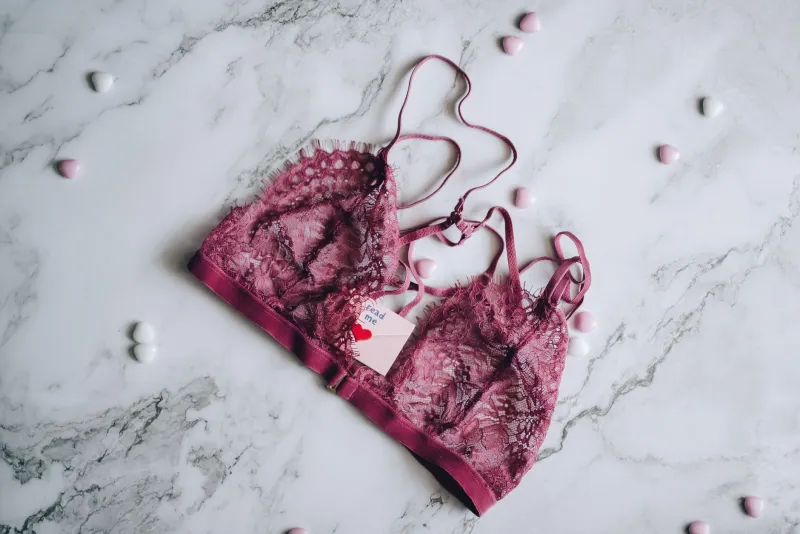
Your Body Already Knows What to Wear — You Just Have to Listen
Some mornings you reach for the silk blouse and everything about it is wrong. The fabric that felt luxurious last Tuesday now feels like too much — too slippery, too formal, too loud somehow. You put it on, catch yourself in the mirror, and take it off again within thirty seconds. Your body made that call before your brain even caught up.
This happens more than we acknowledge. The dress that looked perfect on the hanger feels restrictive by 10 a.m. The jeans you wore all last week suddenly feel like a punishment. The oversized sweater you almost didn't grab turns out to be the only thing that makes sense. None of this is random. Your body is running its own wardrobe algorithm, and it's been doing it your entire life. Most of us just haven't learned to read it yet.
The Sensory Dialogue We Skip Past
Getting dressed tends to get treated as a visual problem. We look at ourselves, we look at our clothes, we make a choice based on what we see. But the body's relationship with clothing is overwhelmingly sensory — texture against skin, the give of a waistband when you breathe, the way a collar sits on your neck, the sound of a fabric when you move. These signals are constantly running in the background, and when we ignore them, we end up spending the day in a low-grade war with what we're wearing.
You know this feeling. The tag you couldn't stop noticing. The sleeve that kept slipping. The underwire that was fine at 8 a.m. and unbearable by noon. On some level, your body was trying to tell you something at 7:45, and you didn't have the time — or the framework — to hear it.
Listening changes everything. Not in a dramatic, overhaul-your-whole-wardrobe way. In a quieter, more daily way. In the way that makes getting dressed feel less like a task and more like a conversation you're actually a participant in.
Your Mood Changes the Fit
Here's something nobody puts in fashion advice: the same pair of pants fits differently depending on how you feel. Not just physically — though that's real too — but experientially. On a confident day, the high-waisted trousers feel sharp and intentional. On a day when you're already running low, they feel constraining. The pants didn't change. You did.
This matters because it means there's no such thing as a universally perfect outfit. There are outfits that are right for who you are today. And figuring out who that is before you get dressed — even just taking ten seconds to check in with yourself — is one of the most practical style moves you can make.
Ask yourself: What does my body want to feel today? Held in or free? Soft or structured? Visible or a little under the radar? These aren't abstract questions. They have real answers that point directly to what you should be reaching for.
The Cycle Factor
If you have a menstrual cycle, your body's clothing preferences shift in ways that are completely predictable once you start paying attention. During the follicular phase — the first half of your cycle, after your period ends — energy tends to rise, confidence often follows, and you might find yourself reaching for things that are a little more fitted, a little more intentional. Ovulation is often peak "I want to wear the good dress" energy.
The luteal phase and the days leading up to your period are a different story. Bloating, sensitivity, fatigue — your body is doing a lot, and what it usually wants from clothing is comfort, softness, and room to breathe. This is not the time to force yourself into the structured blazer because it's what you planned to wear. This is the time to have a rotation of pieces you already know make you feel held and comfortable, so you're not starting from scratch when you're already depleted.
Tracking this — even loosely — means you stop being surprised by your own preferences. You start anticipating them. And that's when getting dressed becomes genuinely easier.
When Your Body Says No
There's a particular kind of getting-dressed moment that most of us know well: you've put on something that should work — it fits, it's appropriate, it looks fine — and your body just quietly, persistently says no. You can't quite name what's wrong. It just doesn't feel right.
Trust that. Seriously. The instinct to override this feeling and wear the thing anyway because you've already decided on it, or because you don't have time to reconsider, almost always results in a day where you feel slightly off in a way you can't explain to anyone.
Your body's "no" is information. It might be about the fabric, the fit, the color, the occasion — or it might be about something less tangible, like the fact that you wore that dress to something stressful and it's carrying that association now. Either way, it's worth honoring.
Building a Wardrobe That Talks Back
Once you start listening to your body's signals, you'll notice patterns. Certain fabrics consistently feel good — or consistently don't. Certain silhouettes make you feel expansive; others make you feel compressed. Colors you thought you loved look different depending on how much sleep you got.
Let these observations inform what you buy going forward. Instead of shopping based purely on how something looks on a hanger or a model, start asking: How does this feel against my skin right now? Can I breathe in this? Does this give me room to move the way I actually move?
A wardrobe built on sensory honesty is a wardrobe that works for you every single day — not just the days when you happen to feel great. It's a collection of pieces that your body already knows, already trusts, and reaches for without hesitation.
That's not just good style. That's a relationship with yourself worth cultivating.