Beautifully Undone: Why the Cracks in Your Look Are Actually the Best Part
Photo: Elements Of This World, CC BY 2.0, via Wikimedia Commons
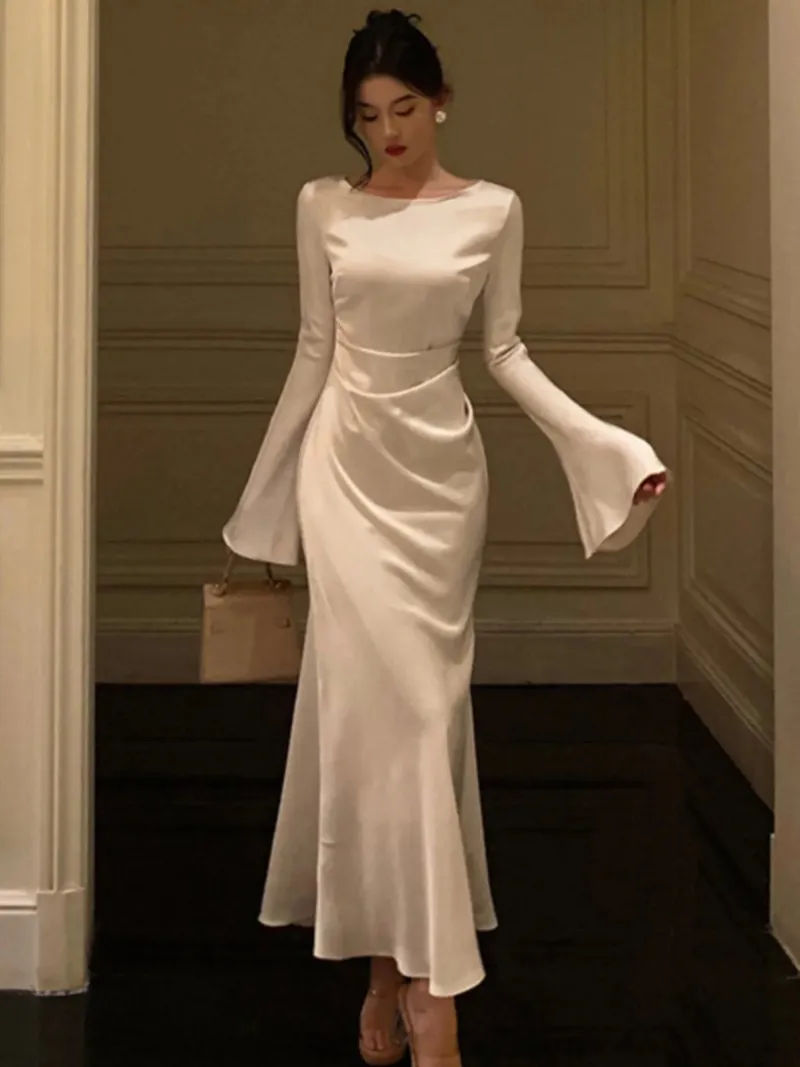
There's a particular kind of woman who walks into a room and everyone notices. Not because her outfit is flawless or her makeup is runway-ready — but because something about her feels real. Her linen dress has that soft, lived-in wrinkle at the hip. A few strands of hair have escaped whatever she did to them this morning. She doesn't look like she spent three hours getting ready, and somehow, that's exactly the point.
We spend so much energy chasing a version of ourselves that's been smoothed, tucked, filtered, and perfected. But here's the thing nobody tells you in the beauty aisle: perfection has no texture. And texture is what makes something — and someone — worth looking at twice.
The Myth We've Been Sold
For decades, the fashion and beauty industries sold us a very specific idea of what "put together" should look like. Pore-free skin. Not a single flyaway. Clothes that look like they've never touched a human body. And while there's absolutely nothing wrong with loving a polished look, we absorbed something else along with those images — the idea that anything less than that standard was a failure.
Social media didn't invent this pressure, but it definitely turned up the volume. Suddenly, every outfit had to be a photoshoot. Every morning face had to be a glow. And somewhere in that noise, a lot of us started editing out the very things that made us interesting.
The freckles got covered. The natural curl got flat-ironed. The slightly-too-big vintage blazer got returned for something more "correct."
But here's what the algorithm doesn't capture: the way a person actually looks — the warmth of their real skin, the way their eyes crinkle when they laugh, the imperfect charm of a lip that's been bitten — that's what stays with people.
Celebrities Who Got It Right by Getting It Wrong
Some of the most iconic style moments in recent memory weren't polished at all. Think about the way Zoë Kravitz consistently shows up — minimal makeup, slightly undone hair, clothes that look like they belong to her rather than a stylist's mood board. Or the way Halle Bailey embraced her natural curls at events where every other woman had blown-out perfection. Or Tracee Ellis Ross, who has built an entire aesthetic around joyful, slightly chaotic self-expression that refuses to be tamed.
These women aren't accidentally undone. They've made a deliberate choice to let their realness lead — and it's magnetic in a way that no stylist can manufacture.
Even in everyday spaces, the women we find most compelling tend to have this quality. The friend who wears her grandmother's slightly-too-long cardigan with total conviction. The coworker who skips foundation and lets her skin just be. There's an ease to them that reads as confidence, even when — especially when — it's paired with imperfection.
What "Imperfectly Romantic" Actually Looks Like
So what does this look like in practice, beyond just skipping concealer and hoping for the best?
It's about intentional ease. It's the difference between a wrinkled linen dress you threw on because you couldn't be bothered, and a wrinkled linen dress you chose because you love the way linen softens with wear. One is carelessness. The other is a point of view.
A few things that fall into the beautifully-undone category:
- The barely-there bun that's half fallen out by noon and somehow looks better for it
- Visible freckles left uncovered, especially across the nose and cheeks — they read as sun-kissed and alive in a way that no highlighter can replicate
- Oversized pieces worn with something fitted underneath, creating that effortless proportion that says you dressed for yourself
- Slightly smudged liner at the end of an evening — the smoky eye you didn't plan but arrived at naturally
- Natural nails in a soft, sheer pink or left bare, because sometimes the absence of something is its own kind of statement
None of these things are about being lazy. They're about making room for your actual self to show up.
The Confidence Paradox
Here's what's interesting from a pure attraction standpoint: vulnerability signals safety. When someone is visibly, comfortably imperfect, they communicate that they're not performing for you. And that honesty — that lack of armor — is deeply, almost irrationally appealing.
Psychologists have a term for this: the pratfall effect. The basic idea is that people who are highly competent become more likable when they show a small flaw or make a minor mistake. The imperfection humanizes them. It creates an opening.
Style works the same way. A look that's a little undone, a little lived-in, a little you — it invites people in rather than holding them at arm's length.
The perfectly curated woman can feel intimidating, untouchable, like a display in a window. The woman with the slightly-smudged mascara and the linen that's seen better days? She feels like someone you could actually know.
How to Lean Into It Without Losing Yourself
This isn't a manifesto for abandoning effort. Getting ready is one of life's genuine pleasures — the ritual of it, the creativity of it, the way a great outfit can shift your entire mood. That's real, and it matters.
But there's a difference between effort and armor. Between caring about how you look and needing every detail to be controlled.
Try letting one thing go. Just one. Leave the freckles. Wear the slightly-wrinkled blouse you love. Skip the third coat of mascara. See how it feels to walk out the door with something imperfect and own it completely.
Because here's the secret that romantic style has always known: the most beautiful thing you can wear is the quiet confidence of someone who doesn't need to be perfect to feel worthy of being seen.
That's not a flaw. That's the whole look.